Why Nor'easter Season Is the Worst Time to Ignore Your Sump Pump
If you live in New Haven, you already know that nor'easters are not just a weather forecast; they are a seasonal threat that can dump inches of rain in hours and push groundwater right up against your foundation. These storms often arrive with little warning, and when the power flickers or the temperature drops, your sump pump becomes the single most important appliance in your home. A pump that has sat idle for months is exactly the kind of equipment that fails when you need it most. That is why fall maintenance is not optional for homeowners in this region.
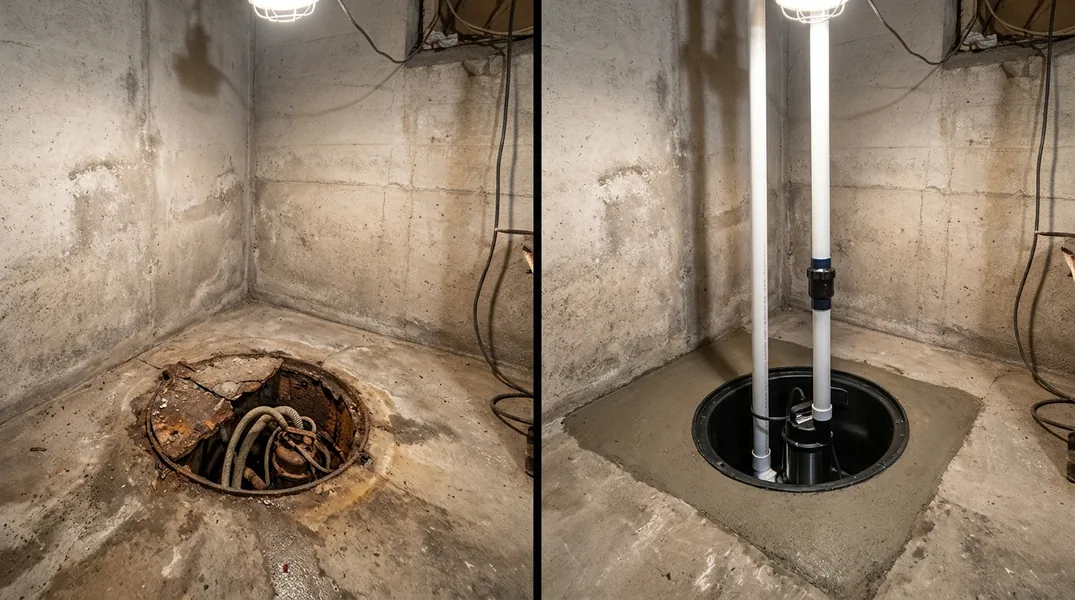
Think of your sump pump as the first line of defense for your Basement Waterproofing system. Even the best Interior Drain Tile System relies on a functioning pump to move water out and away from the house. If the pump is clogged, stuck, or underpowered, water will back up into the basin and eventually onto your floor. Before the first nor'easter hits, take the time to inspect and test your system so you are not scrambling in the middle of a storm.
Step One: Test the Pump and Clean the Pit
The simplest way to check your sump pump is to pour a few gallons of water into the pit and watch how the pump responds. It should kick on quickly, drain the water fast, and shut off without cycling repeatedly. If the pump hesitates, runs loudly, or does not shut off, you may have a float switch issue or a failing motor. While you are at it, remove any debris, silt, or gravel from the pit. A dirty pit can clog the intake and cause the pump to overheat. Homeowners in Branford and Wallingford often find that sediment buildup is the culprit behind a pump that suddenly stops working during heavy rain.
Also check the discharge line for kinks, ice, or blockages. The water needs a clear path to the exterior, and if the line is buried or runs underground, make sure the outlet is not submerged or frozen. If your discharge line is prone to freezing, consider installing a freeze-resistant adapter or insulating the exposed section. A little prevention now can save you from a flooded basement later, and it is far cheaper than emergency repairs.
The Sump Pump Check Valve: A Small Part with a Big Job
The sump pump check valve is a one-way valve that prevents water from flowing back into the pit after the pump shuts off. Without a working check valve, every cycle allows water to drain back down, forcing the pump to work harder and run more often. Over time, this shortens the pump's lifespan and can lead to overheating. During your maintenance check, inspect the valve for debris or mineral buildup, and make sure it is installed in the correct orientation. If the valve is more than a few years old or has been exposed to heavy sediment, replacing it is a cheap insurance policy.
It is also worth checking the connection between the pump and the discharge pipe. A loose fitting or a cracked valve can leak water back into the pit, creating the illusion that the pump is running constantly. If you notice the pump cycling every few minutes even when there is no rain, the check valve is a likely suspect. For homeowners in Cheshire, a properly functioning check valve is especially important because the water table can remain high for days after a storm, putting continuous pressure on your system.
Battery Backup Sump Pumps: Your Safety Net When the Power Fails
Nor'easters are famous for knocking out power, and a sump pump without a battery backup sump pump is essentially useless during an outage. A battery backup system runs independently of your home's electrical supply, so it can keep pumping water even when the grid goes down. These systems typically include a deep-cycle battery and a separate float switch, and they are designed to handle the most critical hours of a storm. If you do not have one, seriously consider adding it before winter. It is one of the best investments you can make for storm resilience.
If you already have a battery backup, test it monthly and replace the battery every three to five years. Check the terminals for corrosion and make sure the charger is working. During a nor'easter, the backup pump may run for hours, so a healthy battery is non-negotiable. Many homeowners in New Haven discover their backup battery is dead only when the power goes out, which is exactly the wrong time to find out. A quick load test or a professional inspection can give you peace of mind before the season starts.
Storm Basement Flooding: When to Call a Professional Near Me
Even with regular maintenance, some problems are beyond a DIY fix. If your pump runs constantly, trips the circuit breaker, or makes grinding noises, it is time to call a professional. Persistent storm basement flooding often points to a larger issue, such as a failing Foundation Waterproofing system or inadequate drainage around the foundation. A trained technician can assess the entire system, from the pump to the drain tile, and recommend the right solution. If you are searching for sump pump maintenance near me, look for a local company that understands the specific soil and water conditions in New Haven.
Do not wait until the first nor'easter is bearing down on the coast. Schedule a maintenance visit now, and ask about a free estimate for any needed repairs or upgrades. You can also call New Haven Waterproofing at (475) 254-7661 to speak with a specialist. A few hours of preventive care today can save you thousands in water damage and stress later. Your basement, and your peace of mind, will thank you.
Looking for a professional basement waterproofing contractor in New Haven? New Haven Waterproofing responds fast for all your basement waterproofing needs.
Get a Free QuoteOur services: Basement Waterproofing · Interior Drain Tile System · Exterior Basement Waterproofing